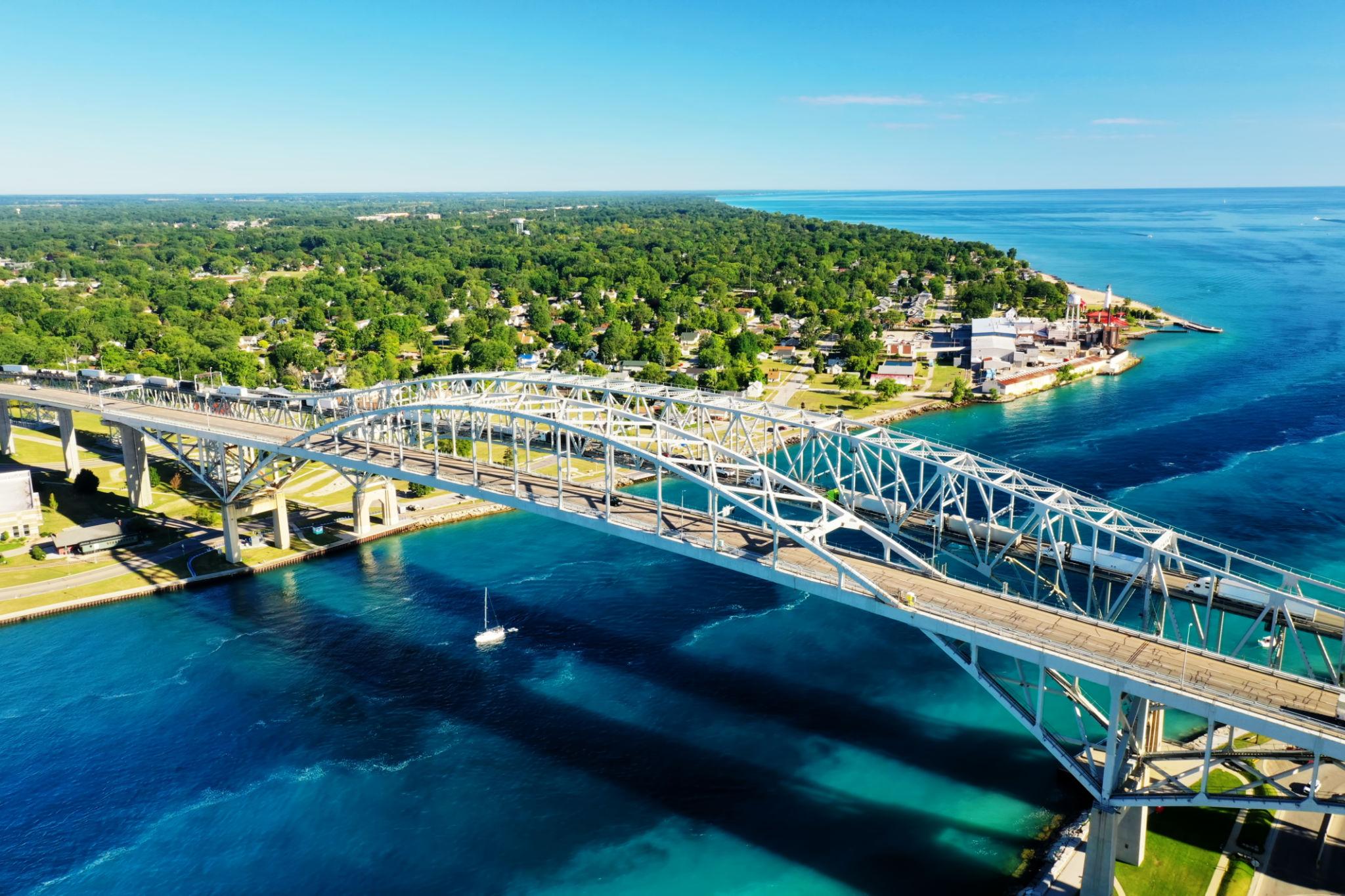
Portfolio appraisals are not just bigger single-property reports. They have their own logic, their own blind spots, and their own opportunities to create or destroy value. In Lambton County, that complexity comes wrapped in a very specific market fabric: an industrial base anchored by Chemical Valley in Sarnia, logistics influenced by the Blue Water Bridge, a mix of small town main streets and grocery-anchored plazas in places like Petrolia and Corunna, and working farmland that abuts utility corridors and wind projects in Lambton Shores. When clients ask for a multi-asset valuation here, they want more than a cap rate and a paragraph of boilerplate. They want a defensible opinion that accounts for how these assets perform together, not just how they look in isolation.
I have valued portfolios in Lambton County that included small bay industrial near Chris Hadfield Airport, a downtown Sarnia office mid-rise, a highway service site along 402, and a stable retail strip in Petrolia with local credit tenants. The obvious question is how you add them up. The better question is where their risks and cash flows rhyme or diverge, and how a prudent buyer would underwrite that ensemble.
What makes Lambton County different
The backbone of local demand is industrial, petrochemical, and logistics oriented. That affects rent trajectories, tenant credit, and exposure to environmental risk more than in a typical southwestern Ontario county.
Sarnia’s industrial lands, stretching from LaSalle Line to the waterfront, are not homogeneous. Inside the older heavy industrial core, site utility is high but so is the likelihood of legacy issues. Step a few blocks east and you hit small bay flex with 18 to 22 foot clear heights and modest office buildouts that attract service contractors tied to the plants. Lease-up times in that niche tend to sit near the regional average when vacancy rises, but headline rents can lag the Windsor and London corridors in weaker cycles. That gap narrows when local shutdown work and turnarounds flood subcontractors into town.
Retail strength is thinly spread but durable. Petrolia’s downtown benefits from draw from rural catchments and a stable healthcare employment base. Highway-oriented pads near 402 interchanges capture logistics and commuter traffic, with fuel and QSR volumes tied to cross-border flows. Tenants are often a blend of national banners and resilient local operators. Where a GTA strip might lean on glossy tenant covenants, here you weigh operating history and local franchise performance more heavily.
Office has bifurcated. Government and institutional occupiers hold up the upper tier, while private sector tenants in B and C class space seek value, shorter terms, and generous improvement allowances. Post-2020, renewal terms grew shorter and landlords who adjusted sooner on concessions saw better retention. That shows up in stabilized vacancy and, crucially, in the discount rate you pick when you roll a DCF.
On top of market patterns, the map itself matters. St. Clair Township and Point Edward have different zoning and permitting timelines than the City of Sarnia. You cross a municipal boundary, you change a site’s development path. The county Official Plan overlays, source water protection zones along the St. Clair River, and proximity to Enbridge storage or transmission corridors can all tilt a highest and best use conclusion.
This terrain shapes the practice of commercial real estate appraisal in Lambton County. An opinion that reads fine for a Toronto lender may miss what a Sarnia industrial buyer actually weighs, and that disconnect shows in portfolio premiums or discounts an outside firm might gloss over.
The portfolio lens: think in systems, not silos
Take a five asset assignment: two light industrial buildings in Sarnia’s east side industrial park, one straddling a shallow market for 6,000 to 12,000 square foot units and the other split among three tenants with staggered expiries; a mid-size office in downtown Sarnia with government on the second and third floors; a retail strip in Petrolia anchored by a pharmacy; and a single tenant warehouse near Corunna with a local logistics operator feeding the petrochemical plants.
Valued one by one, you would probably run direct comparison for land influence checks, income capitalization for stabilized assets, and a cost approach for any special-purpose component. Now step back to the portfolio. Two items jump out.
First, rollover risk correlation. If 30 to 40 percent of the industrial gross leasable area expires within 24 months across both buildings, your risk is not just that one tenant may leave. Your risk is that these industrial units compete for the same tenant pool, so a softening in contractor demand could hit both at once. A portfolio buyer will either lift the discount rate slightly or bump vacancy and credit loss assumptions where those expiries cluster. In a single-asset world you might smooth that with an average. In a portfolio, you test the tails.
Second, liquidity at sale. A single tenant warehouse with a local covenant can be highly liquid within a radius of buyers who know the operator and their relationship with the petrochemical majors. Pair it with an older office showing 15 percent vacancy and another five points of shadow vacancy, and the bundle narrows your buyer pool. Some will price the office with a heavier re-tenanting reserve and capex, others will ask for a small portfolio-level discount to reflect the time value of capital tied up across disparate assets. Once you model transaction friction honestly, you understand why a valuation may show a slight divergence between sum of parts and portfolio value.
These patterns drive choices. In a Lambton County portfolio, well-located small bay industrial and grocery-anchored retail can provide ballast, while older suburban office or properties with unresolved environmental questions will drag. Your job is not to advocate for a neat number, it is to show how a cautious investor reconciles uneven parts.
Data discipline: what to assemble before you start
Even when the assets are familiar, details decide the outcome. Submetering provisions, roof ages, and off-balance sheet obligations matter as much as headline rents. A clean data room accelerates analysis and lowers the margin of error. Over dozens of multi-asset assignments, the following package consistently shortens timelines and reduces later qualification language.
- Executed leases, amendments, and any side letters, with a current rent roll that reconciles to monthly billings Three years of operating statements per asset, separated into recoverable and non-recoverable expenses, plus a capital expenditure log Recent environmental and building reports, including any Phase I or II ESAs, roof and HVAC reports, and fire safety inspections Title documents and surveys, including easements, encroachments, and site plan agreements, along with zoning confirmations A lease expiry schedule rolling month by month for at least 36 months, plus any pending offers to lease or renewals in negotiation
This list looks obvious until you run into a mixed industrial and retail portfolio where utility costs are blended across units or where a landlord has paid tenant improvements that are amortized off the rent schedule. In Lambton County, where net leases are common, the recoveries language in a lease is a small legal universe. If water, storm, and sewer charges spike in a wet year, who truly bears that expense in a given lease? You do not want to guess.
Approach selection and weighting across assets
The three canonical appraisal approaches still hold. How you weight them across asset types, and whether you run sub-scenarios inside each approach, decides the quality of your result.
Income approach. For stabilized income properties, direct capitalization works well when market support for going-in cap rates is reasonably deep. In Lambton County, depth is better for small and mid-size industrial and for service retail than it is for private office. For older office, a short-term DCF with an explicit lease-up schedule for existing vacancy and staggered rollover often reads truer than a simple cap. It forces you to show the path from current to stabilized, including tenant incentives, free rent, and timing risk.
Direct comparison. Land value benchmarking should be run for each property even when it is not the primary approach. In multi-asset retail and industrial portfolios, I often use comparison to test implicit land-to-building ratios that emerge from income results. If a small bay industrial asset with modest rents throws off a value that implies land at 50 percent of the total in a location where recent sales suggest 30 percent is more typical, you may be overvaluing income conditions that are unlikely to persist through the next cycle.
Cost approach. This is more than a box to tick for special-purpose assets. In Sarnia’s older industrial stock, replacement cost new less depreciation can act as a sanity check when market activity thins, especially if insurers have recent replacement studies. You would not hang a value on cost alone, but when environmental limitations or functional obsolescence drive big spreads between cost and income results, cost analysis keeps you honest.
For a balanced Lambton County portfolio, I usually end up with income as the lead for stabilized assets, a short DCF for any space with meaningful vacancy or near-term rollover clustering, comparison as support for residual land value and market rent checks, and cost as a reasonableness test on special-purpose elements. The common trap is to standardize cap rates across dissimilar assets. Respect the micro market. A tidy grocery-anchored strip in Petrolia with strong tenant sales floor can support a going-in yield that would be too sharp for a similar age retail in a thinner trade area.
Market inputs that tend to move the needle locally
Cap rates. Over the last couple of years, buyers for Lambton County industrial and service retail have generally underwritten going-in yields in the mid 5s to mid 6s for clean, well-located assets with strong tenancy, drifting higher when functional issues or short lease terms enter the picture. Older office or assets with clear re-tenanting risk often price in the high 6s to 8s, sometimes higher if significant capital is required. These are guideposts, not promises. Asset quality, tenant credit, and municipal context quickly widen the bands.
Vacancy and downtime. For small bay industrial, downtime between tenants can sit anywhere from three to nine months depending on size and buildout, shorter when shutdown work is heavy. For office, expect longer, with meaningful incentives, especially outside core government-tenanted buildings. Retail downtime varies widely with tenant mix. A shadow vacancy creep in tertiary strips deserves to be made explicit when modeling.
Rents and recoveries. Net rents for small bay industrial often range broadly, and recoveries typically pass through property taxes, insurance, and common area maintenance. Retail recoveries can be messier, especially in older plazas with a patchwork of leases where some tenants sit on gross or semi-gross structures. When a landlord absorbs non-recoverable management or admin costs at one property but not another, portfolio normalization avoids mispricing.
Operating costs. Snow removal, utilities, and property taxes drive variability. In harsh winters snow care can exceed a typical budget line by 20 to 40 percent, then normalize. Over several local portfolios I have seen common area costs push net effective rents down meaningfully for smaller tenants with fixed budgets. If the client’s rent roll looks strong but recent recoveries sit at the high end, I call it out. Sustainability of effective rent is what matters in a five year hold.
Environmental reality, not footnote
Ask anyone who has tried to finance older industrial near the river without a recent Phase I ESA. In Lambton County, environmental diligence is not a line item, it is a gating item. The presence of a historical tank, an old rail spur, or a former dry cleaner can move value tens of basis points or more through both perceived risk and lender requirements.
I worked a portfolio that included a light industrial asset three blocks from a heavy industrial site. A 15 year old Phase I, a sheen in a catch basin after a storm, and a tenant who stored solvents. Lender pulled up short until the owner completed fresh Phase I and scoped a limited Phase II. Results came back clean, but six weeks elapsed and a renewal window for a key tenant collided with financing uncertainty. That timing risk degraded the asset’s contribution to the portfolio value, not because anything was found, but because the process itself created a non-trivial chance of delay.
When you are delivering a commercial property appraisal in Lambton County, especially for industrial and logistics, bake the environmental process into your time and risk math. Buyers and lenders do the same.
Highest and best use in small markets requires patience
It is easy to write that an older office could convert to residential or that a retail box could be split for medical. The constraint is usually not imagination, it is absorption, municipal appetite, and budget. In Sarnia and surrounding municipalities, rezoning and site plan approvals can be orderly but not rapid. Infrastructure capacity, traffic engineering at state-controlled intersections near 402, and conservation authority input near watercourses extend timelines.
In practice, when a portfolio includes a clear repositioning candidate, I run two scenarios. One, continuation as is with market consistent incentives and vacancy. Two, a phased reposition with plausible rent and cost assumptions anchored in local quotes or contractor histories, not generic spreadsheets. If the second path produces a higher net present value but only if things go perfectly, that tells the client what they need to know. You can assign probability weights and show an expected value that better reflects market thinking.
The role of aggregation: premiums and discounts
A repeated question in multi-asset work is whether a portfolio trades at a premium or discount to the sum of its parts. In Lambton County, I have seen both, and the drivers are practical.
A premium appears when the bundle solves a strategic goal for a buyer. For example, a local industrial operator wanting to control their growth corridor may pay more for two adjacent light industrial properties if the portfolio gives them flexibility to expand or consolidate tenants over time. Similarly, an investor assembling service retail in Petrolia, Corunna, and Wyoming for operating leverage on property management can justify tighter yields than they would on a one-off deal.
Discounts arise when the bundle requires specialized management or capital allocation discipline across assets that do not share economies. A dated office with deferred capital paired with two easy-to-own industrial boxes can produce a blended result that deters investors who prefer clean income. In those cases, a rational buyer will talk in terms of drag, not synergy, and you reflect that in the discount rate or explicit adjustments for lease-up and capital.
The point is that the portfolio number is not arithmetic. It is a market behavior. A credible opinion shows the case for either outcome and cites the evidence in leases, costs, tenant quality, and realistic timelines.
Regulatory and tax context you cannot ignore
Property tax in Ontario runs through MPAC’s assessment and the municipality’s mill rate. In Lambton County, where industrial assessments can change with occupancy and use, an owner’s recent Request for Reconsideration history matters. If a recent RfR or Assessment Review Board decision reset the baseline, you should carry that into projected expense recoveries and total occupancy costs. I have watched deals wobble because a buyer misread a temporary reduction as permanent. In a portfolio, the error multiplies.
Zoning confirmations from each municipality matter, especially for properties straddling site-specific provisions or historical minor variances. In St. Clair Township, for instance, the same use description can carry different performance standards than in the City of Sarnia. A seemingly routine outdoor storage yard in an industrial zone can become a non-starter if screening or setback rules are missed.
Development charges, cash-in-lieu for parking, and parkland dedications seldom dominate outcomes in stabilized assets, but if a repositioning or expansion sits in the plan, do the math now. In smaller markets, a single surprise charge can erase a year of projected NOI gains.
A grounded process and timeline
No two portfolios in the county look the same, but a disciplined cadence prevents drift and aligns expectations.
- Scoping and data collection, 1 to 2 weeks: finalize the asset list, confirm intended use and reporting standards, and build the data room checklists. Start municipal and environmental confirmations early if gaps exist. Site inspections, 3 to 6 days depending on geography: prioritize assets with the most moving parts. Photograph, verify areas, and talk with on-site managers and tenants when permitted. Analysis, 2 to 3 weeks: clean the rent roll, normalize operating statements, run market rent and expense benchmarks, build DCFs where warranted, and test land value via comparison. Hold an interim call to surface issues before drafting. Drafting and internal review, 1 week: write asset narratives that reflect local context, document assumptions, and reconcile approaches with portfolio-level commentary on premiums or discounts. Client review and finalization, 3 to 5 days: address factual clarifications, incorporate late-arriving documents, and set a plan for any follow-up if material information remains outstanding.
Timelines compress or stretch with data quality, access, and the need for third-party reports. When a lender or investment committee is on the other end, being candid about gating items reclaims time.
Common judgment calls and how to handle them
Partial or fractured interests. A condominiumized industrial bay within an otherwise fee simple portfolio complicates comps and buyer pools. If one asset is strata titled, very few investors in Lambton County will see that as positive. Your valuation reflects less liquidity and potentially higher operating friction.
Short remaining terms with expansion rights. Light industrial tenants often carry ROFRs or expansion options tied to adjacent bays. Those rights can impede backfilling with higher rent tenants. When the rent sits below current asking rates, you model the option constraint even if the likelihood of exercise is uncertain.
Roof age and HVAC. In older retail and small bay industrial, capital items are binary risks. A 19 year old roof with patchwork repairs is not the same as a similarly aged roof with a clean inspection history. In portfolios, I keep a simple capital map showing the stacked five year capital program. It tells a buyer whether they face lumpiness or can smooth spend. That affects price through perceived risk, not just arithmetic.
Currency and cross-border exposure. Some Lambton County industrial tenants invoice in US dollars because their end customers sit across the river. That currency exposure can cut two ways. During Canadian dollar weakness, tenants feel flush, but over a full cycle the volatility can feed into covenant quality. If a material share of your portfolio’s NOI comes from such tenants, make the risk visible.
Bringing it back to practice
Clients do not need a tour of theory. They need a commercial appraisal service in Lambton County that reads the tenant roster like a lender, treats environmental diligence like a project manager, and respects municipal nuance like a planner. You cannot https://telegra.ph/Commercial-Building-Appraisal-in-Lambton-County-for-Insurance-Purposes-05-12-2 fix weak assets with optimistic math, but you can communicate where the risk lives and how a smart buyer prices it.
A recent assignment combined a Point Edward light industrial with clean tenant covenants, a Petrolia retail strip anchored by a national pharmacy, a Corunna warehouse with a strong local logistics operator, and an older Sarnia office with 12 percent vacancy and old common areas. The sum-of-parts valuation priced the office at a level the owner found discouraging. At the portfolio level, two dynamics helped. First, the retail strip’s long-term anchor lease and strong sales support permitted a slightly sharper cap than the owner expected, and fair comparison evidence backed it up. Second, the buyer pool we modeled for the warehouse overlapped with buyers for the light industrial, creating a plausible case for modest operating synergy in maintenance and leasing. After showing both the arithmetic sum and a portfolio perspective, we supported a small premium to the sum-of-parts number, with a transparent set of assumptions the lender could interrogate. The owner did not just get a number, they got a map of why it was the right number for this market.
Choosing the right appraiser and setting expectations
Not every commercial appraiser in Lambton County approaches portfolios with the same rigor, and not every assignment warrants the same depth. If your assets are young, simple, and fully leased to strong covenants, a streamlined analysis can be fair and efficient. If your holdings include older industrial near sensitive areas, retail with legacy leases, or office with stubborn vacancy, insist on a scope that acknowledges those realities. Ask which approaches will be used and why, what market evidence will anchor cap rates and rent assumptions, how environmental and municipal factors will be reflected, and how the final report will reconcile asset-level and portfolio-level perspectives.
The best commercial appraisal services in Lambton County are grounded, not flashy. They know that a clean rent roll is not the same thing as durable cash flow, that a strong comparable is only as good as its adjustments, and that a client’s strategic goal sets the frame for how an opinion should be read. A report delivered without practical commentary on rollover, capital timing, and likely buyer behavior is half a report.
Portfolio work rewards clarity. It asks an appraiser to separate what is measurable from what is simply knowable, then to deliver an opinion that respects both. If you get that right in Lambton County, with its industrial spine, service retail pockets, and transitional office stock, you can help owners, buyers, and lenders make better decisions without surprises. And that, in the end, is what a commercial building appraisal in Lambton County ought to deliver: a fair view of reality, without drama, with enough detail for smart people to act.